
Postural Correction
- Spine physiotherapy
- Ortho & musculoskeletal physiotherapy
- Neurological rehabilitation
- Paediatric Physiotherapy
- Manual Therapy
- Geriatric Care
- Sports Injuries
- Injury Prevention & Conditioning
- Spinal Disorders
- Congenital Malformations
- Postural Correction
- Sports Performance Enhancement
- Neuro Motor Retraining
MON-SUN 8:00 AM-8:00 PM
+91 8125681212
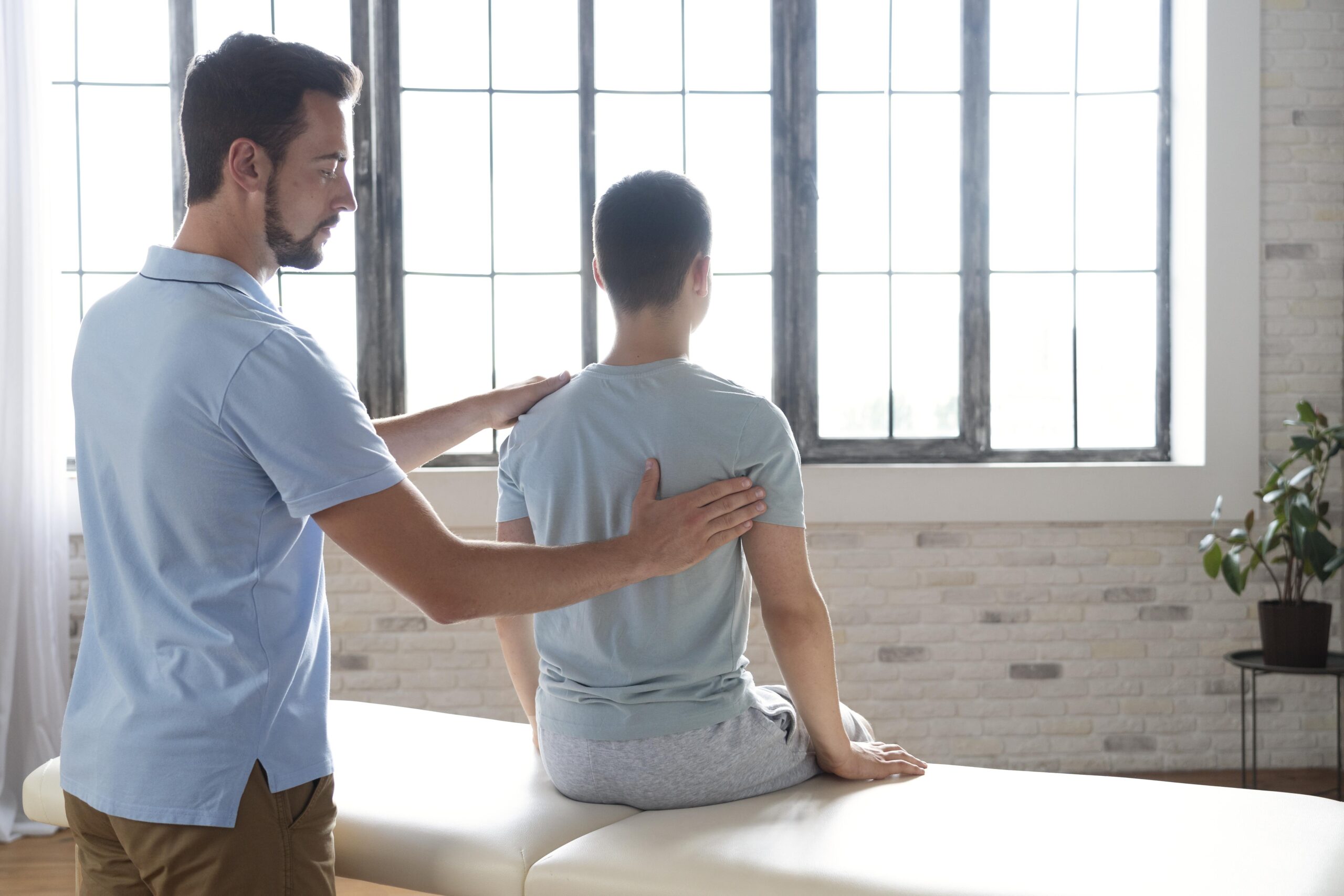
Postural Correction
Postural Correction physiotherapy focuses on identifying and correcting poor posture patterns that develop due to lifestyle habits, work demands, muscle imbalances, or structural issues. The goal is to relieve pain, restore proper alignment, and retrain the body to maintain healthy posture in everyday activities.
What It Covers
Postural correction helps with:- Forward head posture
- Rounded shoulders
- Slouched sitting posture
- Text neck
- Sway back or flat back
- Uneven shoulders or pelvis
- Kyphosis (excessive upper back curve)
- Lordosis (excessive lower back curve)
- Workplace or study-related postural stress
- Weak core and back muscles
- Posture-related muscle tightness and pain
How We Treat
Treatment focuses on posture assessment, muscle balancing, strengthening, ergonomic training, and movement re-education.1. Detailed Posture Assessment
Includes:- Whole-body alignment check
- Neck, shoulder, and spine examination
- Muscle weakness and tightness mapping
- Work/Study habit evaluation
- Sitting, standing, and walking pattern observation
2. Muscle Strengthening & Core Stabilization
We strengthen:- Deep core muscles
- Upper back and shoulder stabilizers
- Neck extensors
- Hip and lower back muscles
3. Stretching & Mobility Training
We target tight areas such as:- Chest muscles
- Neck flexors
- Hamstrings
- Hip flexors
- Upper back
- Lower back
4. Postural Re-education & Habit Training
Includes:- Awareness of correct sitting and standing positions
- Training neutral spine posture
- Functional movement retraining
- Gait (walking) correction
- Teaching daily posture habits
5. Ergonomic Corrections
We guide you on:- Proper workspace setup
- Chair height and desk alignment
- Laptop and mobile usage techniques
- Sleep posture corrections
- Lifting and bending ergonomics
6. Manual Therapy for Alignment & Pain Relief
Includes:- Joint mobilization
- Soft tissue release
- Trigger point therapy
- Myofascial release
7. Strength & Functional Training
We use:- Resistance bands
- Stability exercises
- Wall posture drills
- Balance and coordination training
Outcomes You Can Expect
- Improved posture and body alignment
- Reduced neck, shoulder, and back pain
- Better flexibility and muscle balance
- Increased core strength
- Enhanced lung capacity and energy levels
- Reduced fatigue during work/study
- Fewer posture-related headaches
- Long-term prevention of spinal issues
Where Can I Get Some?
Can poor posture really cause long-term pain?
Yes. Poor posture increases strain on the neck, back, and shoulder muscles, leading to chronic pain over time. Early correction helps prevent future spinal problems.
How long does it take to improve posture?
Most people notice visible improvement in 3–6 weeks with consistent exercises and ergonomic changes. Long-term habits keep the results permanent.
Do I need equipment to correct my posture?
No, most posture correction exercises use your body weight and simple movements. Optional tools like resistance bands or ergonomic chairs can support faster progress.